How End-to-End Export Solutions Reduce Risk for International Buyers
| 13 Mar 2026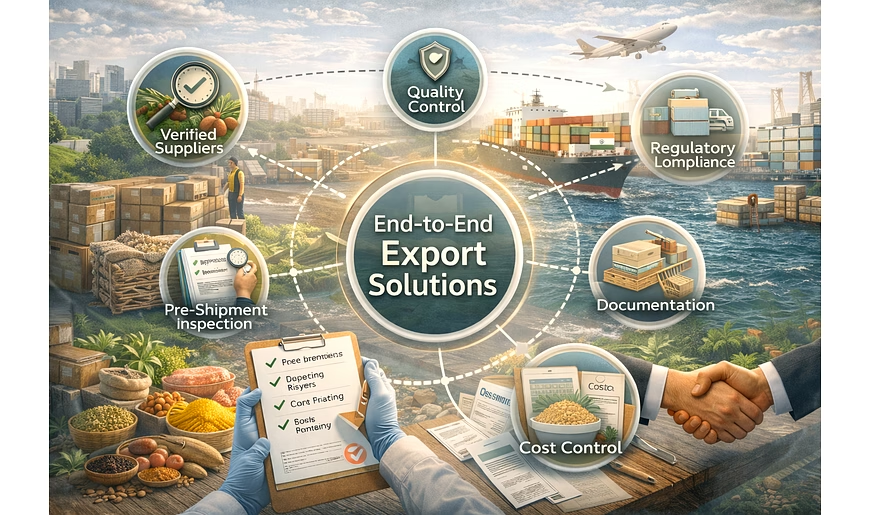
International agro trade involves multiple stages, stakeholders, and regulatory requirements. For importers and global buyers, managing these complexities independently can increase the risk of delays, regulatory non-compliance, quality issues, and unexpected operational costs.
This is where end-to-end export solutions become highly valuable. By managing the entire export process within a coordinated system, professional exporters reduce operational risks and provide greater transparency, control, and reliability for international buyers engaged in agro sourcing.
End-to-end export solutions refer to a comprehensive export model in which a single export partner manages the entire process—from product sourcing and quality verification to export documentation, logistics coordination, and final delivery.
This integrated approach reduces operational gaps that often occur when multiple vendors are involved. With centralized coordination, exporters can streamline workflows, reduce miscommunication, and ensure smoother execution across the supply chain.
What End-to-End Export Covers
End-to-end export services typically include product sourcing and supplier verification, quality inspection and compliance checks, packaging and labeling, export documentation and customs clearance, and logistics coordination through to delivery.
Quality inconsistency is one of the most common risks in international agro trade. End-to-end exporters address this challenge by implementing standardized quality control procedures across the entire supply chain.
By maintaining oversight of sourcing, processing, and inspection stages, exporters ensure that products meet agreed quality specifications and international market standards before shipment.
Quality Risk Reduction
Quality assurance measures typically include verified and audited supplier networks, standardized product specifications, pre-shipment inspections, and batch-wise quality monitoring.
Regulatory non-compliance can cause shipment delays, financial penalties, or product rejection at destination ports. End-to-end exporters actively monitor international trade regulations and destination-country requirements to ensure compliance at every stage of the export process.
Accurate documentation, regulatory alignment, and proactive compliance checks significantly reduce the risk of disruptions during customs clearance.
Compliance Risk Control
Compliance management includes destination-country regulatory expertise, accurate export documentation, coordination with customs authorities, and compliance verification before shipment dispatch.
Logistics disruptions can affect delivery timelines and increase operational costs for importers. End-to-end exporters mitigate these risks by coordinating closely with freight forwarders, shipping partners, and logistics providers.
Integrated logistics planning ensures efficient shipment scheduling, optimized routes, and consistent communication throughout the shipping process.
Logistics Risk Management
Effective logistics risk management includes optimized shipping routes, reliable freight forwarding partnerships, proactive shipment planning, and transit monitoring with continuous coordination.
Unexpected costs are a common concern in international agro trade. End-to-end export solutions improve cost transparency by providing clear pricing structures and well-defined service responsibilities.
When a single exporter manages the process, duplication of services is minimized and operational efficiency improves, allowing buyers to plan procurement budgets with greater accuracy.
Cost Control Benefits
Benefits include transparent pricing structures, reduced duplication of operational services, improved logistics planning efficiency, and lower risk of penalties or demurrage charges.
When multiple service providers are involved in an export transaction, accountability can become fragmented. End-to-end exporters simplify communication by providing a single point of coordination for the entire export process.
This centralized communication model improves information flow, speeds up issue resolution, and ensures that responsibilities are clearly defined.
Communication Advantages
Communication improvements include single-point coordination, clear documentation flow, timely updates and reporting, and faster decision-making during the export process.
End-to-end export solutions are designed to support long-term business relationships rather than one-time transactions. Exporters who manage the full supply chain invest in understanding buyer needs, market requirements, and future growth strategies.
This partnership-focused approach strengthens trust and provides buyers with greater operational stability in international agro trade.
Long-Term Partnership Value
Benefits include consistent supply and product quality, improved planning and forecasting, better cost efficiency over time, and reduced supply chain uncertainty.
End-to-end export solutions involve managing the entire export process—from sourcing and quality control to documentation, logistics coordination, and delivery—under one integrated system.
They reduce risk by ensuring consistent quality, regulatory compliance, accurate documentation, reliable logistics coordination, transparent pricing, and clear communication throughout the supply chain.
Yes, professional exporters coordinate export documentation and customs clearance with experienced agents to ensure smooth regulatory processing.
Not necessarily. By reducing errors, delays, and duplication of services, end-to-end export solutions often improve cost efficiency and predictability.
Yes, they are particularly helpful for first-time importers because they simplify complex export procedures and reduce operational learning risks.
In international agro trade, risk management is just as important as product quality and pricing. End-to-end export solutions provide buyers with structured processes, supply chain transparency, and operational reliability.
By partnering with exporters who manage the entire export lifecycle, international buyers can reduce operational risk, ensure regulatory compliance, and focus on expanding their presence in global markets.