Packaging Solutions in Agro Exports: How Export-Grade Packaging Protects Product Quality
| 13 Mar 2026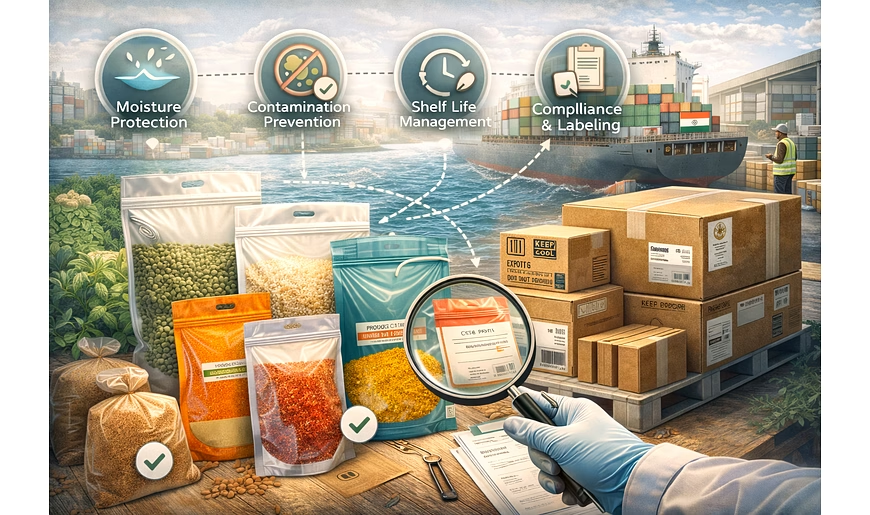
In international agro trade, packaging plays a critical role in preserving product quality, safety, and shelf life. Even the highest-quality agro products can suffer damage, contamination, or quality degradation if packaging standards are inadequate.
For importers and global buyers, understanding export-grade packaging solutions in agro exports is essential to reduce supply chain risks, ensure regulatory compliance, and maintain product integrity from origin to destination. This guide explains how professional packaging systems help protect agro products during international shipping.
Agro products are highly sensitive to environmental conditions such as moisture, temperature fluctuations, handling practices, and long transit durations. Export-grade packaging is specifically designed to protect these products throughout the entire shipping journey.
Professional exporters treat packaging as an integral part of quality control rather than a secondary operational step. Well-designed packaging ensures that products maintain their freshness, safety, and appearance when they reach international markets.
Why Packaging Matters
Export-grade packaging protects product quality during transit, prevents contamination and spoilage, supports compliance with international import regulations, and preserves product shelf life and visual quality.
The choice of packaging material depends on the agro product type, destination-country requirements, transportation method, and shelf-life expectations. Export-grade materials are selected to provide durability, food safety compliance, and environmental protection.
Using appropriate packaging materials helps exporters maintain consistent product quality while ensuring safe handling during storage, loading, shipping, and unloading.
Common Packaging Materials
Common materials include food-grade bags and liners, moisture-resistant and airtight packaging systems, corrugated export cartons, and bulk packaging with inner protective layers.
Moisture exposure and contamination are among the most significant risks in agro exports, especially during sea freight and long-distance shipping. Export-grade packaging is designed to minimize exposure to these environmental threats.
In addition to protecting against moisture, packaging systems must also withstand handling during loading, stacking, and transport.
Protective Packaging Features
Protective features typically include moisture barriers and inner liners, sealed and tamper-proof packaging, reinforced outer packaging for transport handling, and hygienic packing environments.
Packaging plays a direct role in determining the shelf life of agro products. Proper packaging solutions help prevent spoilage, oxidation, and quality degradation during storage and transportation.
Exporters design packaging systems that maintain stable environmental conditions for products during long-distance international shipping.
Shelf Life Preservation Methods
Shelf-life management techniques include moisture protection, reduced air exposure, stable stacking and load protection, and adherence to storage and transit guidelines.
Export packaging must comply with destination-country regulations related to labeling, safety standards, and traceability requirements. Non-compliant packaging can lead to shipment delays, inspection issues, or rejection at destination ports.
Exporters ensure that packaging and labeling meet all applicable regulatory requirements before dispatching shipments.
Compliance Considerations
Important compliance elements include destination-specific labeling regulations, product identification and batch information, country-of-origin declarations, and handling or storage instructions.
Different international markets require different packaging formats and labeling specifications. Exporters frequently offer customized packaging solutions to meet buyer preferences, regulatory requirements, and branding objectives.
Customized packaging allows importers to adapt products for their distribution channels and target markets.
Customization Options
Customization may include bulk or retail-ready packaging formats, private labeling and branding, market-specific packaging sizes, and tailored packaging specifications.
Export-grade packaging is most effective when integrated into an end-to-end export management system. Coordinating packaging, quality inspections, compliance checks, and logistics planning helps reduce supply chain risks.
When packaging is aligned with broader export processes, buyers benefit from improved reliability and consistent product quality.
Integrated Packaging Benefits
Integrated packaging strategies help ensure consistent quality across shipments, reduce transit-related losses, improve regulatory compliance management, and strengthen buyer confidence.
Export-grade packaging refers to food-safe, durable, and compliant packaging designed to protect agro products during international transportation and storage.
Packaging protects products from moisture, contamination, physical damage, and environmental exposure, helping maintain freshness, safety, and shelf life.
Yes, packaging can be customized based on destination-country regulations, buyer preferences, packaging sizes, and branding requirements.
Yes, proper packaging significantly improves shelf life by controlling moisture, air exposure, and handling damage during transit.
Packaging and labeling standards can vary by country. Exporters ensure compliance with destination-specific regulations to avoid delays or shipment rejection.
In agro exports, packaging is far more than a protective layer. It is a crucial component of quality assurance, regulatory compliance, and supply chain reliability.
Export-grade packaging safeguards product integrity, minimizes transit risks, and ensures smooth international trade operations. For international buyers, partnering with exporters who prioritize high-quality packaging solutions helps ensure consistent product delivery and long-term sourcing success.