Food Safety Standards and Compliance in Agro Exports: What Importers Must Know
| 13 Mar 2026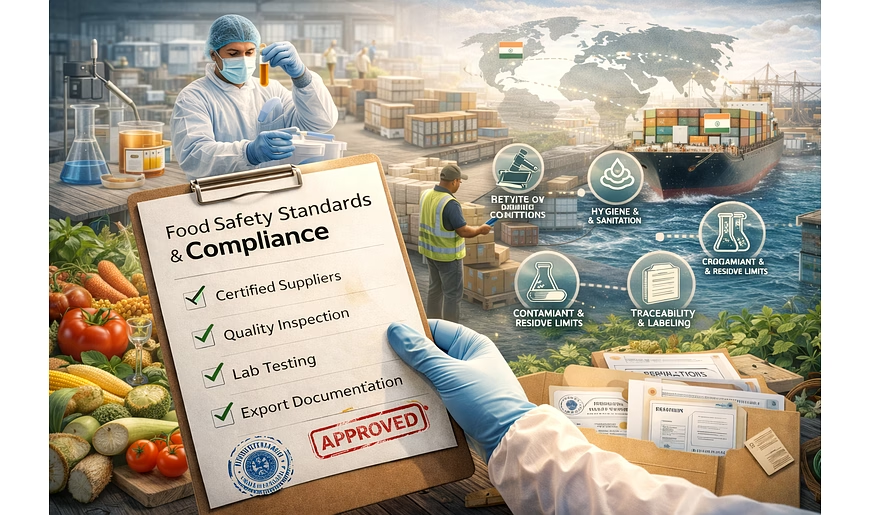
Food safety and regulatory compliance are among the most critical considerations in international agro trade. For global buyers, importing agro products that do not meet food safety standards can result in shipment rejection, financial loss, legal penalties, and reputational damage.
Understanding food safety standards and compliance requirements in agro exports helps importers reduce risk, ensure smooth customs clearance, and maintain consistent product quality across international markets. This guide explains the key regulatory principles and compliance practices global buyers should understand when importing agro commodities.
Food safety regulations are designed to protect consumer health and ensure that agro products entering a country are safe for consumption. In international trade, compliance with these regulations is mandatory, and failure to meet them can disrupt entire supply chains.
Reliable exporters prioritize food safety throughout the production and export process, from sourcing raw materials to processing, packaging, and shipment. A strong food safety framework helps importers maintain product integrity and meet regulatory expectations in destination markets.
Why Food Safety Matters
Food safety compliance protects consumer health and public safety, ensures acceptance at destination ports, prevents shipment delays or rejections, and supports long-term market access for agro products.
Food safety standards differ based on the destination country, the type of agro product being exported, and the intended end-use application. Importers must ensure that all products comply with the regulations and safety guidelines established by the importing country.
Exporters with international trade experience stay updated with evolving global food safety regulations and adjust sourcing, processing, and packaging practices accordingly. This proactive compliance approach helps prevent regulatory issues during customs clearance.
Common Food Safety Requirements
Typical requirements include compliance with destination-country food safety regulations, adherence to hygiene and sanitation standards, control of contaminants and residues, and product labeling and traceability requirements.
Ensuring regulatory compliance in agro exports requires a structured and proactive management system. Professional exporters establish internal compliance frameworks that cover supplier verification, standardized processing procedures, quality inspections, and documentation management.
By implementing compliance-focused processes, exporters can detect potential risks early and maintain consistent adherence to international trade regulations.
Compliance Measures Followed by Exporters
Compliance practices typically include verified and compliant supplier selection, standardized processing and handling procedures, pre-shipment quality inspections, and accurate export documentation and declarations.
Inspections and laboratory testing play an essential role in validating food safety compliance. Depending on the product type and destination regulations, exporters may coordinate product testing through certified laboratories to confirm that products meet required safety limits.
Accurate documentation also supports regulatory verification and helps customs authorities review shipments efficiently. Proper inspection records and documentation reduce the risk of shipment delays or disputes.
Compliance Support Activities
Important activities include pre-shipment inspections, laboratory testing when required, preparation of quality and safety documentation, and coordination with regulatory authorities where necessary.
Food safety regulations and certification requirements vary across countries and regions. Importers must understand destination-specific compliance rules to ensure that shipments meet all regulatory conditions before entering the market.
Experienced exporters often assist buyers by providing guidance on country-specific regulatory requirements, helping importers navigate complex compliance frameworks.
Key Considerations
Regulations differ across regions and countries, certification requirements vary by product category, labeling and documentation rules are market-specific, and compliance updates must be monitored regularly.
Non-compliance with food safety regulations can have serious consequences in international agro trade. Exporters and importers must collaborate closely to identify potential compliance risks before shipments are dispatched.
Preventive compliance measures reduce operational disruptions, financial losses, and regulatory penalties. By implementing strong compliance procedures, businesses can maintain stable trade relationships and consistent product acceptance.
Risks of Non-Compliance
Common risks include shipment rejection or seizure, financial penalties and losses, shipping delays and demurrage costs, and loss of market access or buyer trust.
Successful international agro trade depends on strong partnerships built around compliance and transparency. Exporters who invest in food safety systems, regulatory monitoring, and quality assurance processes provide greater reliability for global buyers.
Working with compliance-focused exporters allows importers to reduce regulatory risk while maintaining consistent supply chain performance.
Partnership Benefits
A compliance-driven partnership supports reduced regulatory risks, consistent compliance across shipments, faster customs clearance, and stronger supply chain confidence.
Food safety standards depend on the destination country and product type. Agro exports must comply with the food safety regulations, hygiene requirements, and import standards defined by the importing country.
Exporters ensure compliance through verified sourcing, standardized processing procedures, regular quality inspections, laboratory testing when required, and accurate documentation aligned with destination-country regulations.
Yes, certification and documentation requirements can vary depending on the destination country and product category. Exporters often assist buyers in preparing the necessary compliance documents.
If products fail regulatory compliance checks, shipments may be delayed, rejected, returned, or destroyed depending on the destination country's rules, which may result in financial and operational losses.
Food safety standards and regulatory compliance are essential pillars of successful international agro trade. Importers who understand these requirements and collaborate with experienced exporters can significantly reduce risk and ensure consistent product acceptance across global markets.
A compliance-driven approach not only protects businesses from regulatory challenges but also strengthens long-term trade partnerships and supply chain reliability.