Key Quality Parameters Global Buyers Should Check When Importing Agro Products
| 13 Mar 2026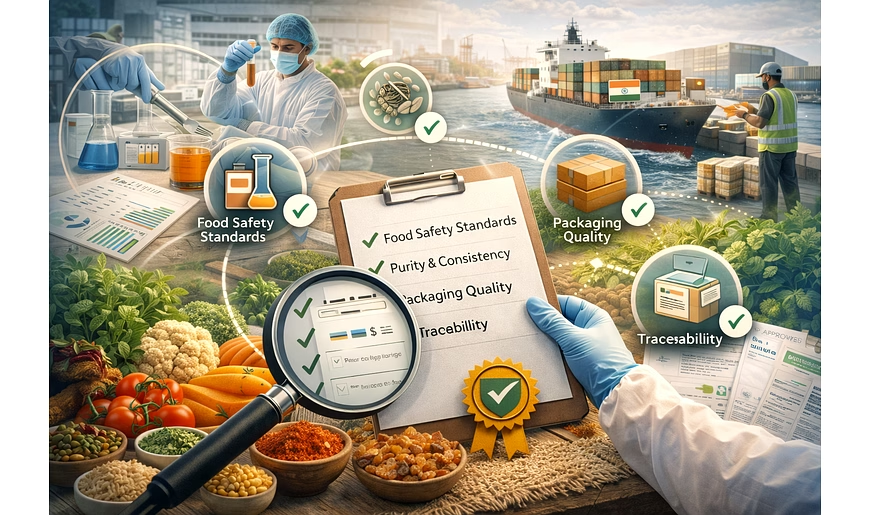
Quality is one of the most critical factors in international agro trade. For global buyers and importers, ensuring consistent product quality is essential to meet regulatory requirements, protect brand reputation, and satisfy end customers.
Understanding the key quality parameters in agro product imports helps buyers minimize risks, avoid shipment rejections, and build reliable long-term sourcing partnerships. This guide explains the most important quality aspects international buyers should evaluate before importing agro commodities and agricultural products from global suppliers.
Clear product specifications form the foundation of quality control in agro imports. Exporters must consistently deliver products that match the agreed parameters across every shipment to maintain trust and reliability in international trade.
Inconsistent product specifications can lead to shipment disputes, customer dissatisfaction, regulatory challenges, and financial losses. Importers should always establish clear specifications before placing orders and verify that exporters follow strict quality benchmarks.
Key Specification Checks
Buyers should evaluate product grade and purity, size, color and texture consistency, moisture content control, and the absence of foreign matter to ensure the product meets expected quality standards.
Agro products imported into international markets must comply with the food safety regulations of the destination country. These regulations are designed to protect consumer health and ensure that food products entering the market are safe for consumption.
Reliable exporters remain updated with international food safety requirements and ensure that processing, handling, and packaging procedures follow applicable regulatory frameworks. Importers should verify that exporters maintain proper documentation and compliance processes.
Food Safety Parameters
Key parameters include compliance with destination-country food regulations, hygienic processing practices, contamination and residue control, and documentation supporting food safety compliance.
Quality assurance begins at the sourcing stage. Exporters with strong quality systems actively monitor production and processing activities to maintain product consistency and reliability throughout the supply chain.
When quality checks begin at the source, exporters can detect potential issues early and prevent defects before products reach the shipping stage. This proactive quality management approach significantly reduces risks in international agro trade.
Source-Level Quality Controls
These controls typically include verified supplier selection, regular supplier audits and evaluations, standardized processing procedures, and batch-wise quality monitoring during production and processing.
Pre-shipment inspections serve as the final quality checkpoint before agro products are dispatched for international transportation. These inspections verify that the shipment meets the buyer’s specifications, contractual agreements, and regulatory requirements.
By conducting inspections before dispatch, exporters and buyers can identify potential issues early, ensuring that only compliant products enter the international supply chain.
Inspection Benefits
Inspection procedures help verify product quality and quantity, confirm packaging and labeling compliance, reduce the risk of shipment rejection, and increase buyer confidence in the supplier relationship.
Export-grade packaging plays a vital role in maintaining agro product quality during international transportation. Even high-quality products can deteriorate during transit if packaging is not designed to protect against moisture, contamination, or physical damage.
Proper packaging also ensures that products remain stable throughout the shipping journey and arrive in the destination market in optimal condition for distribution and consumption.
Packaging Quality Factors
Important factors include food-grade packaging materials, protection against moisture and contamination, shelf-life preservation during transit, and compliance with international labeling regulations.
Traceability ensures transparency across the supply chain and allows buyers to track product origin, production stages, and quality inspections. Strong traceability systems help importers verify authenticity and maintain regulatory compliance.
Documentation also plays a crucial role in resolving disputes, validating compliance during inspections, and supporting smooth customs clearance processes.
Traceability Essentials
Essential documentation includes supplier and batch traceability, quality inspection records, export and compliance documentation, and shipment tracking information.
Consistent quality in agro imports is best achieved through long-term partnerships with reliable exporters. Experienced exporters invest in quality control systems, supplier relationships, and continuous process improvements to maintain product standards.
By building long-term partnerships, importers can benefit from stable supply chains, improved communication, and stronger operational coordination across the export process.
Partnership Advantages
Long-term partnerships help ensure stable product quality, better communication and coordination, reduced quality-related risks, and improved supply chain efficiency.
Quality standards depend on the destination country and product category. Imported agro products must comply with applicable food safety regulations, quality specifications, and import standards defined by the destination market.
Exporters maintain product consistency through verified supplier networks, standardized processing methods, routine quality inspections, and batch-wise monitoring throughout the export supply chain.
Lab testing requirements vary depending on the product type and destination market regulations. Some products require mandatory testing, while others may require testing based on buyer specifications or compliance standards.
Yes. Buyers can request pre-shipment inspection reports and quality documentation to verify that the product meets agreed specifications before shipment.
Quality assurance is a non-negotiable component of international agro trade. By evaluating key quality parameters before importing agro products, global buyers can reduce risks, maintain regulatory compliance, and protect their brand reputation.
Partnering with experienced exporters who prioritize quality control, transparency, and compliance allows buyers to operate with greater confidence and build long-term success in global agro sourcing.